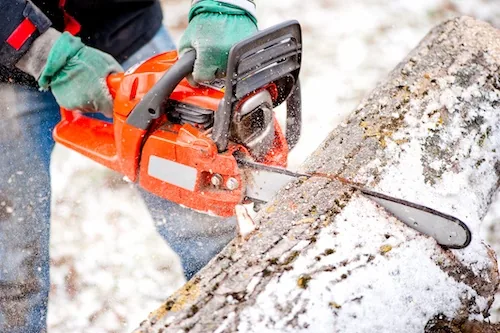
Tree Removal
Dead, damaged and badly sited trees taken out — including tight Queenslander access and steep gully blocks.
Learn more →Removals, lopping, pruning, stumps and storm work from crews who deal with subtropical trees and tight Brisbane blocks every week.
Warm wet summers, a severe storm season that runs from roughly October to March, and a housing stock that puts timber houses on stumps under very large trees. That combination is why Brisbane generates so much tree work. A poinciana that put on three metres of soft growth over summer is brittle by the time the first serious storm line comes through, and a camphor laurel that seeded itself into a fence line twenty years ago is now a real tree with a root plate under the neighbour's path.
Brisbane Tree Care puts property owners in touch with tree contractors working right across the city — from the post-war brick and tile of Chermside and the ridgelines at The Gap to the bayside blocks at Wynnum and out along the Bremer at Ipswich. Call (07) 3132 0074 for a free quote, or use the form on this page and someone will ring back.
Tree removal is the bulk of the work — dead trees, storm-damaged trees, and the ones planted two metres off a slab in 1978 that are now lifting it. Where a tree is worth keeping, lopping and pruning reduces sail area and clears roofs, gutters and service lines without wrecking the structure. Stump grinding finishes the job so the ground can be turfed or built on, and full stump removal is available where a slab or pool is going in over the top.
Beyond that: palms are their own category here, emergency and storm damage work starts with making the site safe, and land clearing covers builds, subdivisions and acreage that has got away from its owner. The full list is on the tree services page.
Brisbane's problem trees are fairly predictable. Poinciana and jacaranda are spectacular for a few weeks and structurally weak for the rest of the year, and a dense poinciana crown over a corrugated roof is a liability by January. Moreton Bay and Hill's weeping figs have root plates that go where they please, which is usually straight into a stormwater line. Spotted gum, tallowwood and ironbark on the western and northern ridges drop serious limbs in dry weather with no warning at all. Camphor laurel, Chinese elm, umbrella tree and cocos palm are weeds that are almost always removals rather than prunes. Hoop pine, mango and leopard tree round out most residential jobs.
Species decides method. A brittle poinciana over a tin roof is a rope-and-lower job, not a drop-and-run one. A fig near a boundary needs the root plate thought about before anyone starts.
Most of Brisbane is not flat open lawn. A high-set Queenslander in Ashgrove or Indooroopilly typically has one narrow side path, a steep back yard falling into a gully, and no way to get a chipper anywhere near the tree. That pushes the work toward climbing, rigging and carrying material out by hand, which takes hours a machine would not. An honest quote reflects that up front instead of moving on the day. Where a tree is genuinely too big for the space, a crane lift from the street can be the cheaper option despite the day rate — the cost guide explains where that line sits.
The single most common expensive mistake in Brisbane is assuming that a tree on your own land is yours to cut. The Natural Assets Local Law, vegetation protection orders, the Significant Landscape Tree Register and plain old street trees on the verge all say otherwise, and Ipswich sits under a different council with its own rules again. The permits and council rules page covers what to check and where.
We will not quote a tree sight unseen and then change the number once the crew is on site. We will not cut a verge tree without council approval. Nobody goes inside the exclusion zone around live powerlines — that work belongs to accredited crews and to Energex. And we will not recommend topping a healthy gum back to stubs because it is the cheap option, because on most Brisbane species that buys you a worse tree and another invoice in three years.
You can see the areas covered on the service areas page, read the tree care notes, or just get in touch and describe the tree.
Brisbane City Council's Natural Assets Local Law protects a lot more vegetation than owners expect. If your tree is covered, you are told at the quote — not after a fine arrives.
High-set Queenslanders, single side paths, steep gully blocks off the ridges. Most jobs here are climb-and-rig, not drop-and-chip, and the quote should say so.
The severe storm season runs roughly October to March. Deadwooding and crown thinning are cheaper and safer in winter than in the week after a November hailstorm.
Topping a healthy gum back to stubs buys you weak regrowth and a second bill. If pruning is the wrong answer for your tree, you will be told that.
Dead, damaged and badly sited trees taken out — including tight Queenslander access and steep gully blocks.
Learn more →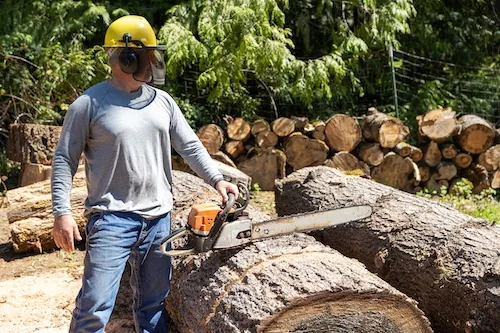
Crown thinning, deadwooding and clearance pruning to Australian Standard AS 4373, not topping.
Learn more →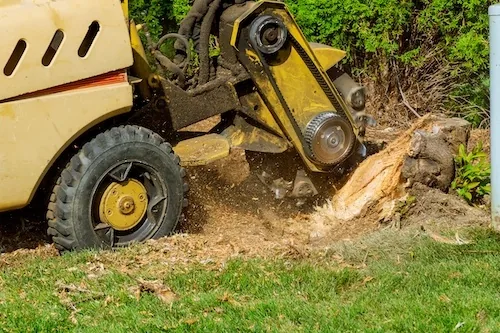
Stumps ground 200-300mm below grade so the ground can be turfed, planted or paved.
Learn more →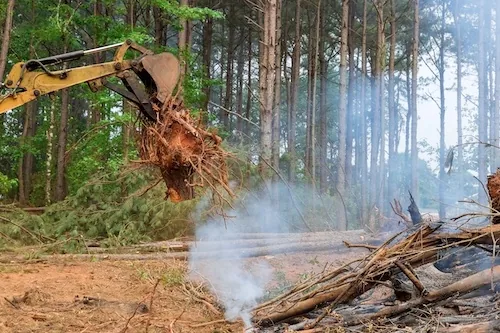
Full stump and root-plate extraction where a slab, pool or new footing is going in.
Learn more →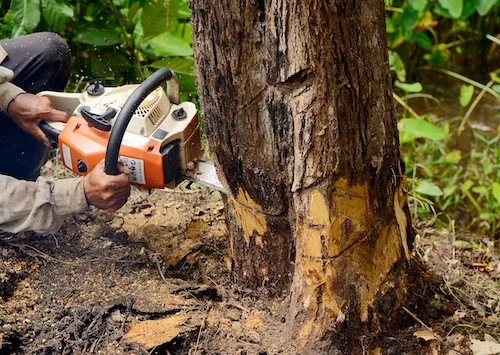
Cocos, foxtail and Alexandra palms de-nutted, tidied or taken out entirely.
Learn more →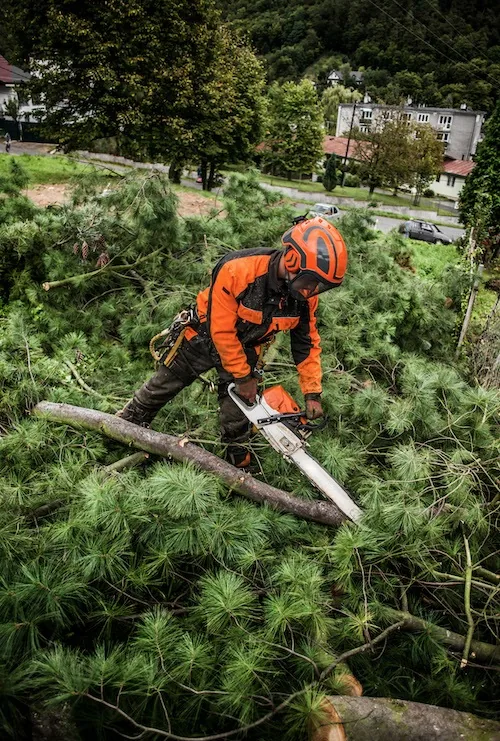
Trees down on roofs, cars and fences after a summer storm — made safe first, cleaned up after.
Learn more →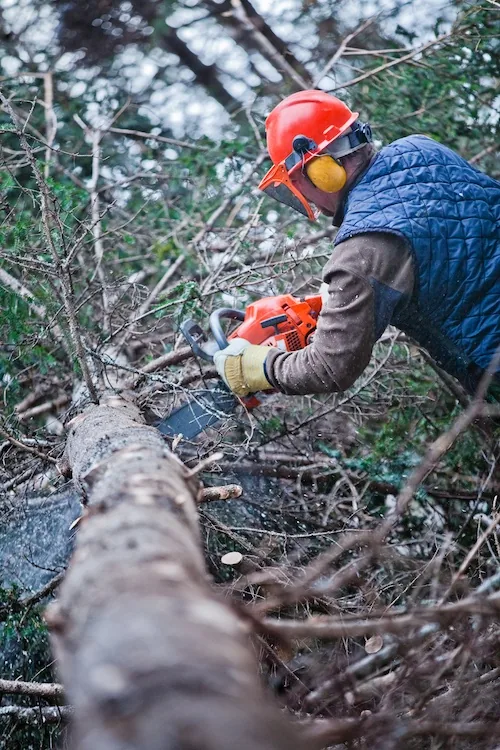
Block clearing and vegetation management for builds, subdivisions and overgrown acreage.
Learn more →Often, yes. Brisbane City Council's Natural Assets Local Law protects vegetation on properties covered by a vegetation protection order, and trees on the Significant Landscape Tree Register are protected outright. Street and verge trees belong to council regardless of who planted them. Ask for the address to be checked before you book, because the penalty lands on the property owner, not the contractor.
It depends almost entirely on size, access and what is underneath the tree. The figures published on this site put most residential removals between about 800 and 1200 dollars, with small open-access trees from around 265 dollars and difficult jobs running to 4200 dollars or more. A crane lift over a house can go past that again. Every job is quoted on site.
Pruning removes whole branches at the right point so the tree can seal the wound and hold its shape. Lopping cuts back to a stub wherever it is convenient. Lopping is faster and cheaper, but on most eucalypts and figs it triggers weak regrowth that tears out in the next southerly buster. Good contractors will tell you when a tree is better removed than repeatedly lopped.
Storm work is triaged rather than booked. Anything on a roof, across a driveway or leaning on a power service is looked at first, usually once the weather has cleared enough to work safely. After a widespread event like a big November hail line, expect a queue, and expect the first visit to be about making the tree safe rather than finishing the clean-up.